Now in its fifth year, the ABE Master Teacher Fellowship Mini-Grant program continues to support innovative approaches to bioscience education. Five Master Teacher Fellows have been awarded 2026–27 mini-grants to build on initiatives developed during their Fellowships and beyond. Their projects aim to expand hands-on learning opportunities, strengthen students’ bioscience skills, and connect classroom learning to real-world applications.
Meet the five mini-grant recipients and learn about their proposals:
Image

| Alison Ackroyd, ABE United Kingdom (2025–26 Cohort) Fold, Transform, Test: Connecting AI with ABE Practical Biotechnology The mini-grant will fund the co-design, piloting, and sharing of an adaptable learning sequence linked to ABE’s Foundations of Biotechnology. It features three connected activities: In “Fold,” students use AlphaFold to explore protein structure and prediction confidence; in “ Transform,” students link recombinant DNA, bacterial transformation, and RFP practicals to protein production; and in “Test,” students use a drug-discovery case study to evaluate AI-supported predictions against experimental evidence while learning about scientific careers. The sequence frames AI as a tool for scientists rather than an unquestioned source of answers, keeping practical work, knowledge, critical thinking, and professional judgement central. |
Image

| Jessica Anderson, U.S. ABE Greater Los Angeles (2025–26 Cohort) Authentic Molecular Case Studies: Integrating DNA Analysis Across High School Life and Environmental Sciences Building on her original Fellowship project (to be published soon), this mini-grant will support the development of case study modules that use biotechnology tools to address conservation and restoration biology challenges. The modules will engage students in using DNA analysis to gather evidence and investigate real-world environmental questions. By leveraging DNA analysis to generate molecular evidence, the developed curriculum will help to transition students from procedural tasks toward immersive, inquiry-driven learning. |
Image
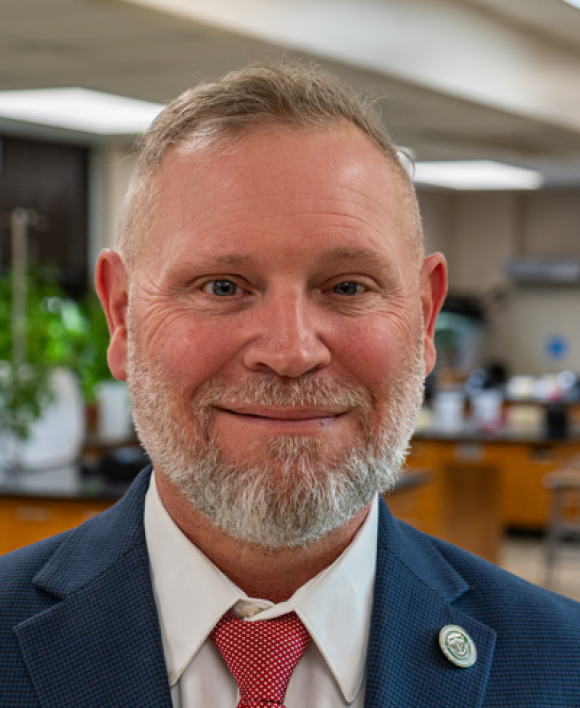
| Patrick Heintz, U.S. ABE Kentucky (2025–26 Cohort) Antibiotic Resistance Testing in the High School Classroom: Kirby-Bauer Disk Diffusion as Authentic Inquiry Building on his original Fellowship project focused on antibiotic susceptibility (to be published soon), this mini-grant will help establish biotechnology as an accessible, enduring practice for approximately 200 Kentucky high school students by setting up eight permanent pipetting stations equipped with personal protective equipment (PPE). The new resources will allow students to engage in inquiry-based biotech year round instead of sporadically, when an ABE kit is borrowed. |
Image

| Patricia Hess, ABE United Kingdom (2025–26 Cohort) From Club to Curriculum: Building Sustainable ABE Capacity at St. Albans High School for Girls With this mini-grant funding, gel electrophoresis equipment will be provided to an all-girls school new to the ABE community. Complemented by support from her school administration, fellow teachers, and a complementary biotech program, this equipment will expand opportunities for inquiry-based learning both in school and within extracurricular afterschool club biotechnology enrichment activities. |
Image

| Fethi Ahmet Öner, ABE Türkiye (2024–25 Cohort) From Misconceptions to Evidence: An Accessible ABE Biotechnology Concept Card and Inquiry Toolkit for Students with Visual Impairments Building on his original Fellowship project, this mini-grant will support the development of accessible learning materials for students with visual impairments. The materials will help students better understand biotechnology vocabulary, concepts, and ethics while addressing common scientific misconceptions found in media and online sources. |
Congratulations again to this year's awardees. We look forward to seeing your work in the future.