What We Do
The Amgen Biotech Experience (ABE) is an innovative science education program that introduces students to the excitement of scientific discovery and builds bridges between school and the real-life biosciences. ABE prepares the next generation of scientists and innovators and provides access to cutting-edge science through four key areas:
Teaching Resources and Equipment
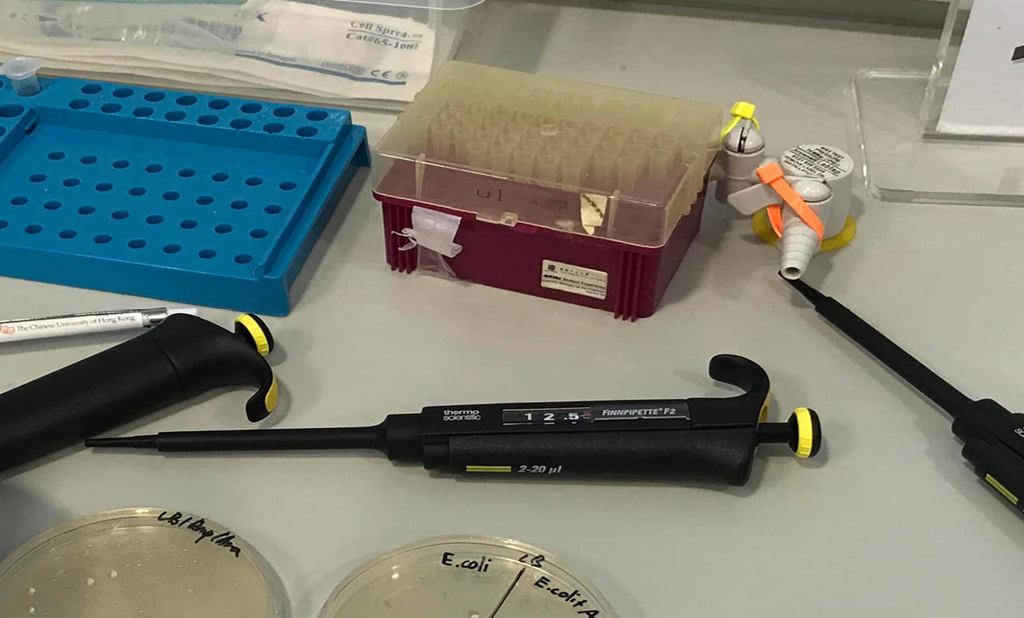
ABE provides high-quality teaching and learning resources for secondary schools, including laboratory-based and classroom-based curriculum materials as well as web-based resources. The program also loans research-grade equipment and supplies at no cost to teachers in select regions.
Teacher Professional Learning and Community
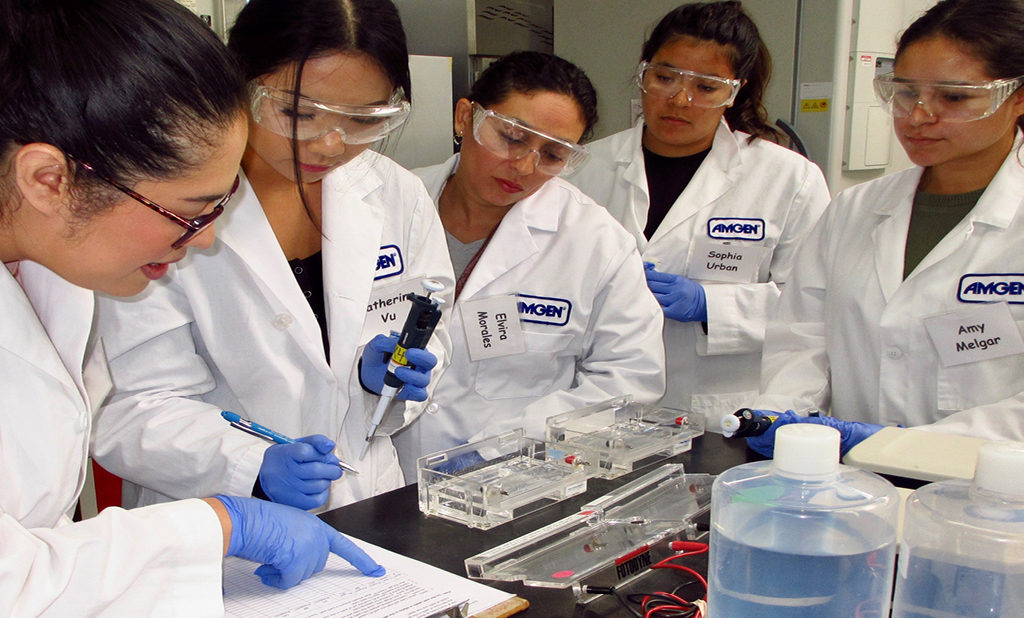
ABE supports teachers around the world through high-quality professional learning experiences, access to a global community of practice, and implementation resources.
Connecting Scientists to Classrooms
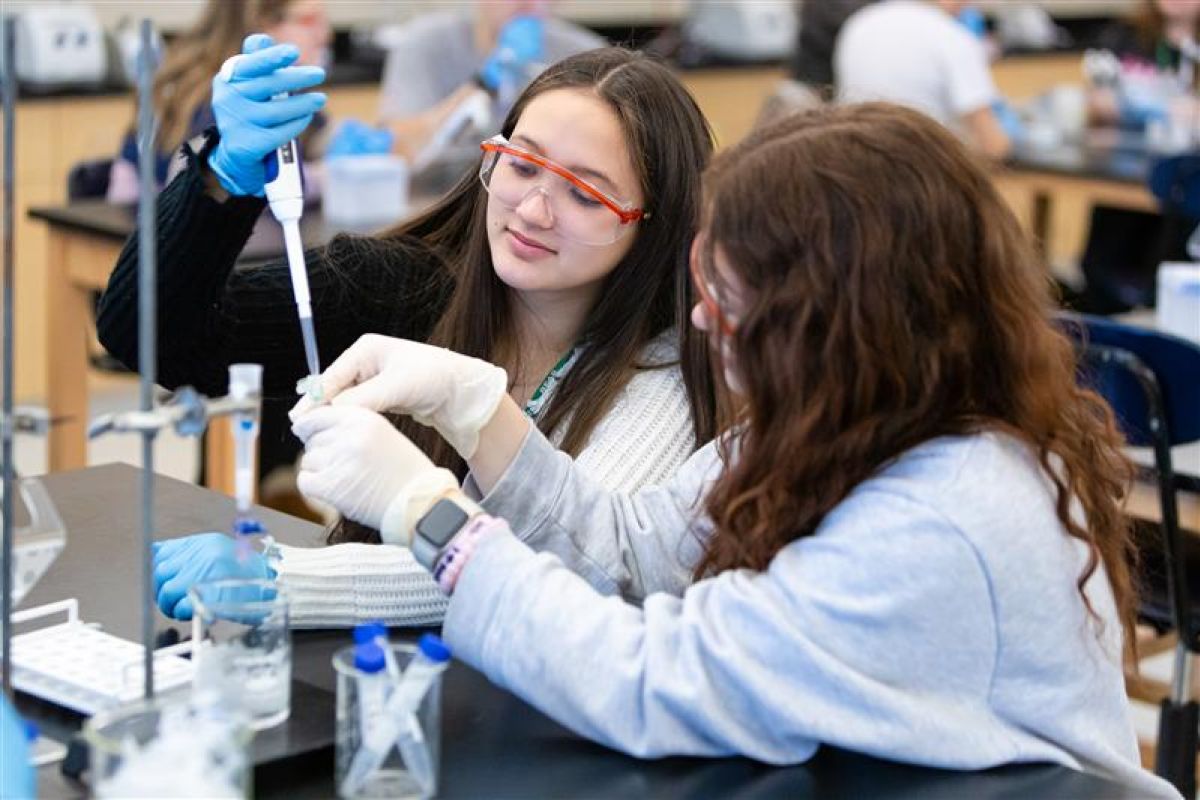
ABE facilitates connections between students and real-world scientists through our ABE Classroom Visit Volunteer Program.
Equity and Access in Biotech
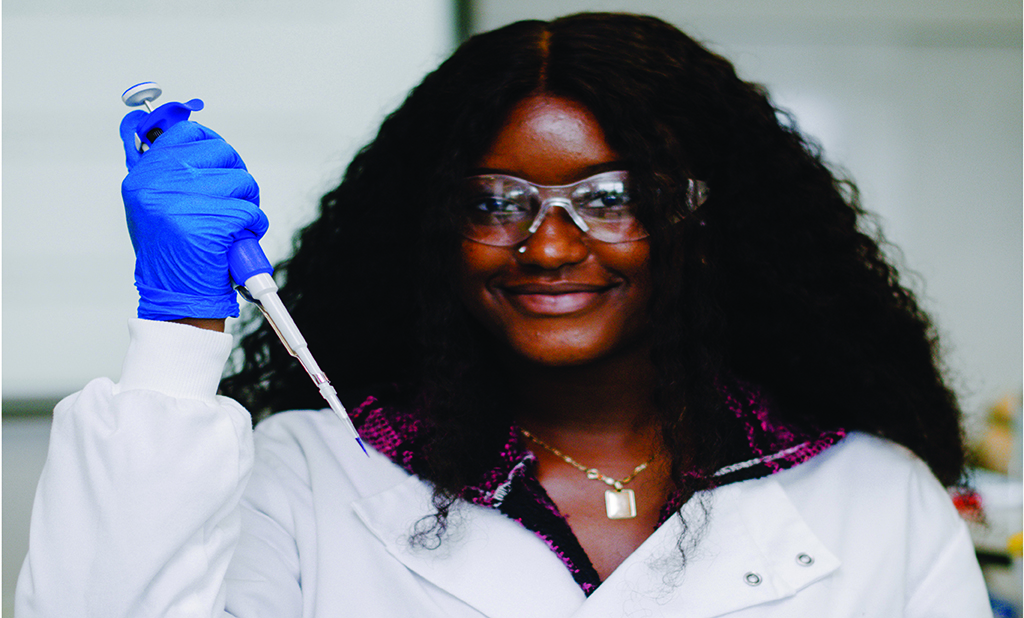
ABE works with the Amgen Foundation to develop and advance opportunities for students furthest from opportunity to access, engage, and succeed in pathways to bioscience.
Download our ABE Fact Sheet for a quick summary of the program.
Impact
- ABE reaches approximately 100,000 students in a typical year.
- Since 1990, the program has reached 1.25 million+ students and has expanded to 27 locations across the globe.
- More than 5,800 teachers have implemented ABE in their classrooms.
- More than 2,900 schools have been served.
ABE Is Effective
Studies have shown that students exposed to ABE have increased interest and confidence in science and biotechnology.


Student and Teacher Testimonials
-
When I started this program about twelve years ago, I had little confidence in implementing biotechnology into my teaching practice. It is because of the trainings and opportunities provided by ABE that I have gained confidence in biotechnology and teach the complete sequence of the labs to my [Advanced Placement and International Baccalaureate] students.
Amy Welch | Teacher, ABE Greater Los AngelesImage
-
Small rural school districts are not able to purchase and maintain the most current biotechnology equipment and are certainly unable to continually invest in the consumable items required to run laboratories. The Amgen Foundation is providing a tremendous service to the current generation by providing the means and opportunity to put ‘real science’ into the hands of all students giving them the inspiration and confidence to yearn for more.
Lisa Sequeira | Teacher, ABE MassachusettsImage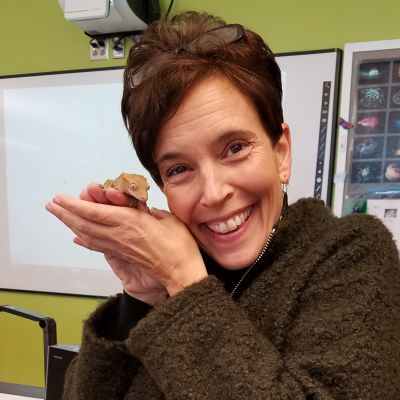
-
I appreciated these labs as it was a different but effective way of learning the unit, and I appreciated the real-world application I got to do as a result.
I really enjoyed these labs because it gave me a sense of what I will be dealing with in labs when I go to college.
Being able to visualize the biotechnology rather than only reading about it in the notes really helped enhance my understanding of how each process worked.
Students, ABE Massachusetts -
When I learned it in class, I had the impression that biotechnology experiment was a high-level experiment, but it was a lot of fun to realize that we could do it ourselves.
Student, ABE Japan -
We constantly have former students come back to tell us that they chose to major in science, biotech or related fields because of this experience.
Jim Mauch | Teacher, ABE Greater Los AngelesImage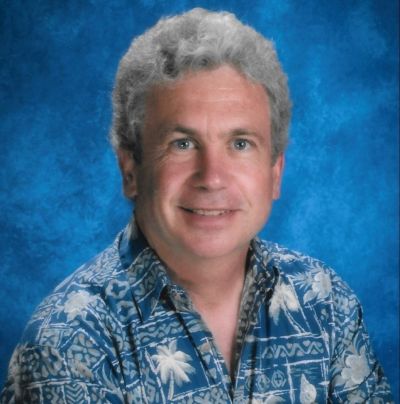
-
In this lab, we got to see the actual DNA under the UV light thanks to fluorescent dyes. This made the work we did with all the equipment tangible, as we could see the DNA strands and how far they traveled. Rather than working with invisible substances, we could finally see our work.
Student, ABE Rhode Island -
Before ABE, I pretty much avoided biotechnology as a curriculum topic. It's hard to teach to students who don't have a framework to understand it, especially when you don't have the equipment, the reagents or the cell cultures and you have limited or no experience with the lab techniques involved. Now that I'm an ABE teacher... it's exciting and it's doable.
Teacher, ABE San Francisco Bay -
What I experienced through ABE goes far beyond the level of accessibility typically available to students like me. The ABE program opened a door to a world where my disability did not limit me—a world where science belongs to me just as much as it belongs to anyone else. This program showed what visually impaired students can achieve when we are provided with the right tools, guidance, and opportunities.
Ada Karakocaoğlu | Student, ABE Türkiye -
ABE is an amazing opportunity to bring real science into the classroom. Students are able to gain valuable skills as well as apply the knowledge we learn in class that I would not be otherwise able to afford on our school budget.
Linda Crossno | Teacher, ABE Greater Los AngelesImage
Program Evidence of Impact
- The ABE Program Office conducted a Global Teacher Survey in 2022, collecting data from teachers across all 19 sites in the 12 countries active at that time. This report offers a summary of the main findings from the survey. View the main points in this infographic.
- ABE was given the highest designation of effectiveness in WestEd’s STEMworks database of programs that meet high standards for quality and impact.
- Independent and rigorous evaluation data found that students exposed to ABE have significant and substantial learning in biotechnology and increased interest and confidence in doing science and biotechnology.
Our History
Though ABE now reaches 100,000 students and 1,700 teachers each year, the program had humble beginnings. It all started with a group of scientists and teachers who had a passion for sharing their knowledge with students.
Amgen scientists believed that the company could be instrumental in providing professional development to area high school teachers, toward a goal of improving science education for students. In 1989, they worked with a biology teacher in Thousand Oaks, California, Hugh Nelson, to teach him the procedures Amgen uses to develop biologics, and Nelson then worked with Amgen scientist Bruce Wallace to fine-tune a series of labs for high school students. Amgen agreed to provide equipment and chemicals to teach the lab procedures in area high schools.
“The labs put students in touch with the reality of modern science,” says Nelson. “It takes money to do experiments, and Amgen provided the funding for this important, transformative program. I’m no less in awe of the program [now] than I was in 1989" (News Chronicle, 9 October, 1990).
In 1999, Amgen enlisted Marty Ikkanda, a professor of biological sciences at Pierce College in Woodland Hills, California, to revise the program’s curriculum to resemble his college classes. The revised program was rolled out to 20 schools the next school year and grew to 30 schools by the school year’s end.
“Teachers tell us they don’t have attendance problems when they’re doing the Amgen biotechnology labs,” says Ikkanda, who retired from the program in 2013. “It’s a fantastic way to interest students in science.” In 2005, the Amgen Foundation, the main philanthropic arm of Amgen, partnered with Professor Ikkanda to expand training outside of Southern California. Over several years, the program expanded to new Amgen communities in the United States and Europe.
In 2013, the Amgen Foundation joined forces with Education Development Center, a global nonprofit organization with deep experience and expertise in science education, to establish a Program Office to support and strengthen the program. The program has continued to expand into new Amgen communities internationally.
A collaboration that began over 30 years ago inspired the ongoing commitment of scientists and teachers to share their knowledge of and passion for science. The Amgen Foundation is proud to continue its support of a program that is stronger than ever—and poised to bring real-world biotechnology to a new generation of teachers and students. “We are proud to partner with Education Development Center to support hands-on biotechnology labs in Amgen communities worldwide," says Scott Heimlich, president of the Amgen Foundation. "What began in a single school over 30 years ago now empowers thousands of teachers annually across 27 communities. Today, a new generation is stepping into these labs, as the children of some of our very first students experience the same program that inspired their parents. This enduring commitment started at one school—and it will continue to reach many, many more.”